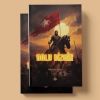
The maps and illustrations are the soul of Osprey books. A high-quality digital edition preserves the crispness of the color plates even when zoomed in.
Nomonhan 1939 (also known as the Battle of Khalkhin Gol) is one of the most significant yet often overlooked battles of the 20th century. Taking place on the border between Manchuria and Mongolia, this was a massive clash between the Soviet Union (led by a then-unknown General Georgy Zhukov) and the Imperial Japanese Army.
But power has a resource not often counted: connections. The agency retaliated not with denial but with surgical redefinition. They called the campaign a "pilot program," then "a necessary consolidation of resources." They released their own PDF—a glossy counter-narrative that rewired language and public perception. They hired a legal team that sent a polite but firm letter to Jamila demanding retraction and threatening litigation. Calder began to show up in the background of town meetings with a camera and an impassive face.
Mira scrolled until the rain outside had thickened into a curtain and the office hallways hummed with the low-frequency sound of fluorescent lights. She tried to remember the contract language that had granted her clearance: “for work product only.� She told herself she’d put the file back and do her job. She told herself the campaign was about coasts. She told herself a lot of things. Instead, she downloaded the PDF, encrypted it, and pushed a copy to a small external drive she kept in a hollowed-out paperback novel. She left the office that night at two a.m. with the rain still clinging to her coat.
Osprey’s Campaign #234, The Fall of the Philippines 1941–42 , remains a cornerstone text for wargamers, historians, and modelers. It masterfully condenses the disastrous first six months of the Pacific War—from the Japanese landings at Lingayen Gulf to the desperate retreat to Bataan and the fall of Corregidor.
The recording was the kind of evidence a prosecutor dreams of: contemporaneous, personal, specific. Jamila played it in the courtroom. The public reaction was immediate and visceral. People who had shrugged at "better" now scoured the beaches for signs. Community groups mobilized. The NGO filed a suit that widened in scope to include obstruction of research, procurement fraud, and wrongful death inquiry. The investigators who once hesitated now had leverage.
In the early days of digital history, the internet was flooded with low-resolution, user-created PDF scans of Osprey books. While they offered the text, these legacy files suffered from several flaws:
Back in the glow of her small apartment, Mira opened the PDF again. This time she read for patterns. The coordinates on page nine lined up with Tomas’s last known project zones, a narrow scatter of reefs forty nautical miles offshore. The "Critical Nodes" list overlapped with the locations where several small fishing communities had recently been offered lucrative redevelopment packages. The Field Ops appendix mentioned "neutralizing threats to project continuity"—a particularly cold phrase for a public-relations campaign.
Osprey Campaigns are . They rely on complex, color-coded 3D "bird's-eye view" maps, technical cutaways of tanks and aircraft, and uniform plates. A standard EPUB reflows text based on screen size, which often shatters map layouts, pushing crucial legends to different pages. A PDF preserves the "fixed layout" exactly as the author and illustrator intended. The text remains locked to the visuals, allowing you to see a tactical diagram on the left page while reading the corresponding analysis on the right.
Osprey Campaign 234 provides a comprehensive overview of how this border war acted as a prelude to World War II. 1. The Operational and Strategic Context
Here is a deep dive into why this specific volume is a must-read and how to ensure you are getting the highest quality reading experience. Why Campaign 234 is a Collector's Favorite